
Welcome Habit Earthers. Habit Earth sets out to help identify the habits in our daily lives that create plastic waste and replace them with better habits for a better planet. In order to change any behavior you have to have a motivation to do so. That motivation often comes from emotional reactions “I want” (seeking) or “I don’t want” (avoidance). This week we’ll focus on some “I don’t want” (avoidance) motivators. So, whether your emotional reaction the last time you saw a plastic bag hanging from a tree was mildly annoyed, or ALL-OUT-TRIGGERED. I hope these four reasons help you find motivation to take a few steps towards reducing your single use plastic consumption.
Production: We produce a lot because we use a lot. Plastics are derived from fossil fuels like Oil and Natural gas. The extraction of oil and natural gas has many negative effects on the environment, including ground-water pollution (you know… the stuff you drink), decimation of natural habitat (because you have to drill somewhere) and CO2 emissions from the machinery and production of machinery used to extract oil and gas.
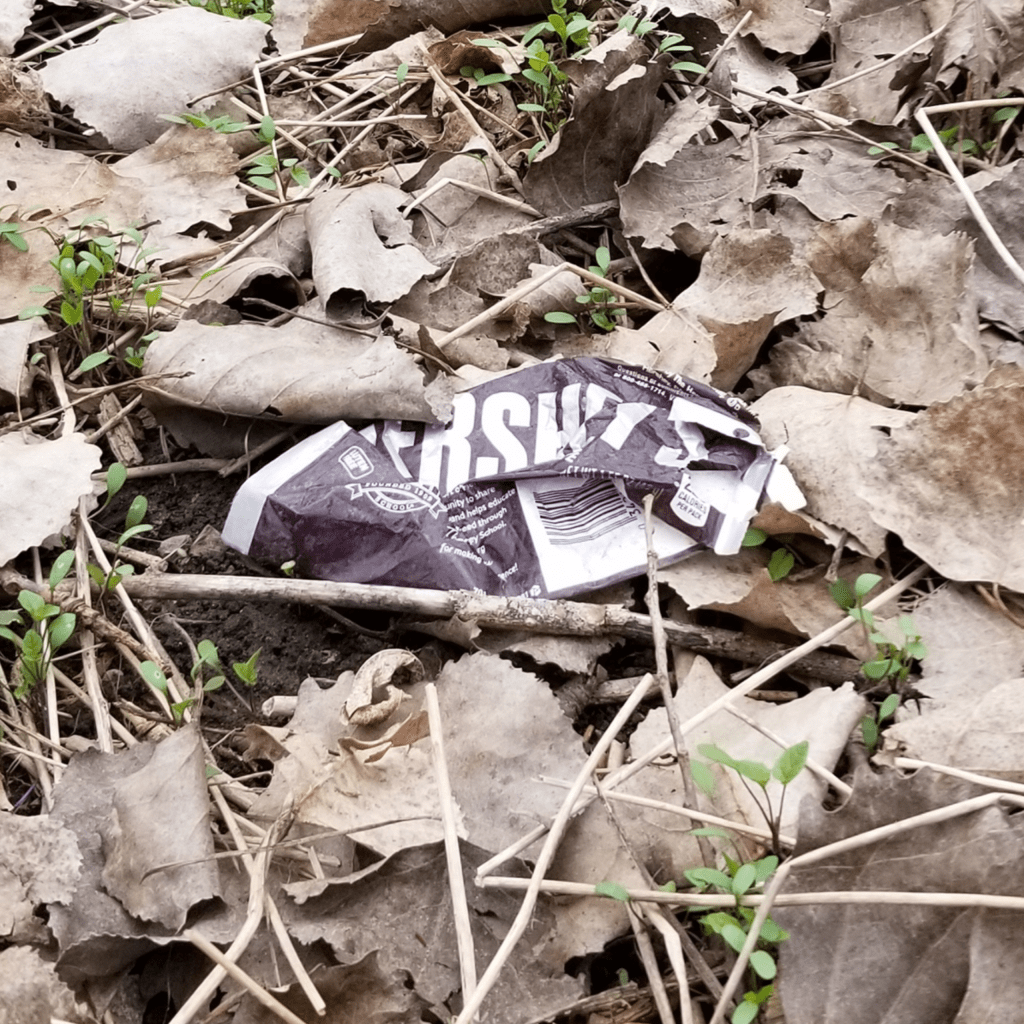
Plastics don’t go away (at least not quickly): Estimates are that most plastics take up to 450 years to decompose. This means that the lid to the latte you had this morning will serve as a memento that on May 4th 2019, you needed a pick-me-up. The fun-size chip bag wandering your neighborhood on the latest breeze will mark the moment that Jack O. was craving some Cheeto’s on December 12, 2010. Archaeologists in the 2400’s will know a lot about people from this time, because our garbage is creating a literal new layer in the earth’s crust!
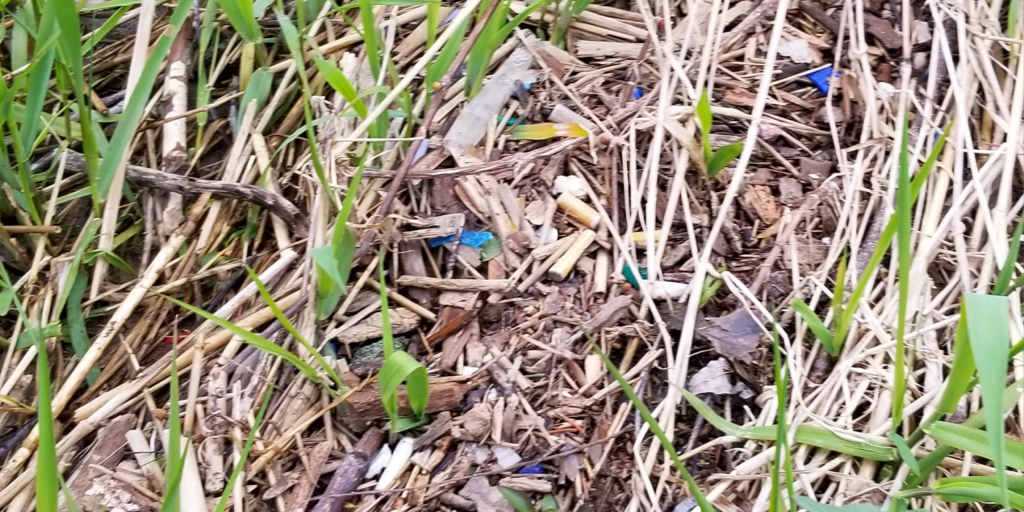
… But they do break down: Plastics don’t biodegrade but they do break down. Plastics break down into tiny particles called micro-plastics; as they are exposed to the sun’s rays or tossed around by wind and water. Think of the journey of a water bottle you pass by on the sidewalk. It may get repeatedly battered by wind and passing cars and eventually be carried to a water way after a heavy rain, or snow-melt. Finally making its way to a lake stream or ocean where currents and waves will repeatedly wear down the bottle in to tiny pieces.
Those tiny pieces are found in beer, tap water and are so small (~2.5 microns) they can pass through your standard Brita filter. A study by scientists at SUNY- Fredonia found that micro-plastics are nearly 2 times more likely to be found in bottled water. That’s like buying a box of cerial and finding chunks of cardboard among your Frosted FlakesÒ, yikes! You probably thought that the reason fish and birds consume plastics is because they aren’t highly developed creatures. Humans ingest plastics every day. Aren’t we developed enough to stop producing them?
Greenhouse Gases: As organic matter in landfills decomposes it creates greenhouse gas as a byproduct. This is true of any decomposition process. However, organic matter breaks down differently at landfills than it does in compost. Layers and layers of plastics and other materials crowd out oxygen, forcing materials to break down anaerobically. In compost you produce CO2 and H2O. The gas byproducts in landfills are 50% CO2 and 50% methane gas (per the EPA). The IPCC (Intergovernmental Panel on Climate Change) states that methane gas is “28 to 36 times more effective than CO2 at trapping heat in the atmosphere over a 100-year period.” Landfills are the third largest source of human-related methane emissions, accounting for 14.1% of total emissions.
Another note:
Landfills also create a liquid called “leachate” that comes from rain, snow or as a byproduct of decomposition and can carry contaminants into groundwater as it seeps into the ground.
So…
Plastics are inexpensive, immediately convenient and systemically involved in nearly every facet of modern life. The problem is, we aren’t exposed to the all-in costs of single use plastic consumption. We have to look deeper to find that while the convenience might enhance the café or fast casual experience; it erodes some of the most important facets of our lives. Air and water quality, biodiversity, neighborhood aesthetics, and our health.
Our dependence on this nasty stuff feeds a destructive cycle, but what are we supposed to do?
DO SOMETHING! ANYTHING!
START: Take one small step today. Say no to a plastic bag, pick up a bottle from the sidewalk on your evening walk, organize a neighborhood cleanup, encourage a friend to get a reusable water bottle.
STUMBLE: Spork happens! You will inevitably use a plastic cup, toss a plastic fork, order at a food at your favorite deli counter only to feel a tightness in your chest as they hand you a Styrofoam container. Luckily you don’t need to be perfect to be part of the movement, you just need to do something!
BUILD: Build habits that will help you take control of your personal waste stream. Turn the inconvenient, awkward stumbling task of starting something into a convenient, smooth and automatic habit! Be imperfect. But try. Please just try. The future depends on you.
- Habit Earth

 Habit Earth